
The Office Nobody Wants to Leave

You have heard every version of the return-to-office argument by now. The mandates. The hybrid schedules. The compromise policies are designed to split the difference between what leadership wants and what employees will tolerate. And yet the fundamental problem remains: most offices still feel like obligations, not destinations.
Here is the part that rarely gets said out loud. The reason employees resist returning has less to do with commute times or flexibility preferences and more to do with what they are returning to. Rows of fixed-height desks under flat lighting with grey laminate surfaces do not compete with a home office that someone has spent three years building themselves. The conversation about return-to-office has been framed as a policy problem. It is actually a design problem.
And that reframe changes everything about how you solve it.
What the research and the resistance are telling you:
Employees who have autonomy over how they work, including their physical position, report measurably higher satisfaction and engagement.
Biophilic design elements such as natural light, greenery, and organic materials have been linked to reduced stress, improved cognitive function, and a stronger emotional connection to a space.
Material quality registers on a subconscious level. People can feel the difference between a space designed with intention and one assembled from a catalog.
The offices drawing people back voluntarily are not offering better snacks. They are offering a better sensory and functional experience than what employees have at home.
If you are an interior designer, architect, or facility manager tasked with solving the return-to-office challenge, the opportunity in front of you is significant. You are not just selecting furniture. You are engineering the emotional argument for showing up.

Height-adjustable solutions as a statement of respect
Start with the most visceral, personal element of the workspace: the workstation itself. A height-adjustable desk is not simply an ergonomic upgrade. It is a signal. It tells the person sitting, or standing, at that station that their comfort, their health, and their autonomy matter to the organization that built this space.
This distinction is critical. When employees work from home, they control their environment completely. They stand when they want. They shift positions. They arrange their space around their own rhythms. Asking them to return to a fixed desk in a fixed position for a fixed number of hours is asking them to give up something they have grown to value deeply.
Height-adjustable workstations close that gap. They say: we are not asking you to sacrifice your well-being for proximity. We are investing in a workspace that adapts to you, not the other way around. Products like the CIMA and Little Black Desk from LaCOUR are engineered precisely for this purpose, offering smooth sit-to-stand transitions within environments built for sustained, demanding use. These are not residential standing desks repurposed for commercial floors. They are contract-grade solutions designed for the volume, intensity, and longevity that corporate environments demand.
When you specify height-adjustable furniture, you are not checking an ergonomics box. You are removing one of the strongest arguments employees have for staying home.

Materials and finishes that earn attention
Now consider what surrounds that workstation. The finishes, the textures, the palette. This is where many return-to-office renovations fall short. The budget goes to technology and infrastructure while surfaces and materials get treated as afterthoughts.
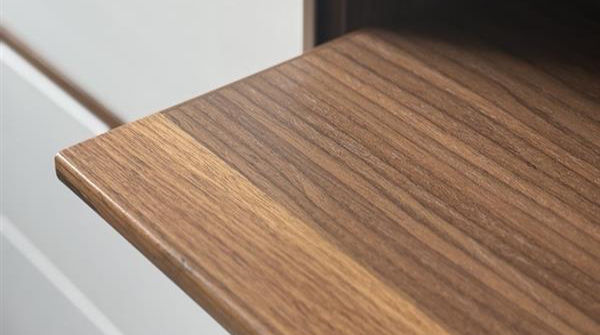
That is a mistake, and your instincts as a designer already tell you why. Material quality shapes perception before a single conscious thought forms. A workspace finished in warm wood tones, soft-touch laminates, or thoughtfully coordinated metal accents communicates something that no memo from leadership can: this place was made with care.
Refined materials do not just look better. They feel better. They influence how people move through a space, how long they want to stay, and how they describe the environment to colleagues who are still deciding whether the commute is worth it. The difference between a surface that feels engineered and one that feels assembled is the difference between a workspace that attracts and one that simply accommodates.
LaCOUR's approach to finishes reflects this understanding. Every product line offers a range of materials and finish options designed to align with your broader design language, whether that means warm naturals for a wellness-forward tech company or sleek, dark palettes for a financial trading environment. The flexibility exists because no two brand stories are identical, and the furniture should reinforce the story you are telling.
Biophilia as more than decoration
Then there is the element that ties the entire environment together: the integration of nature. Biophilic design has moved well beyond the trend stage. The research supporting its impact on cognitive performance, stress reduction, and emotional well-being is substantial and growing. But the execution still lags behind the evidence in most commercial interiors.
A few potted plants on a windowsill do not constitute biophilic design. True integration means weaving natural materials, organic forms, living walls, natural light optimization, and visual connections to the outdoors into the architecture of the space itself. It means selecting furniture with finishes and forms that echo natural patterns rather than fighting against them.
This is where the return-to-office conversation gets genuinely interesting. The home environments employees have curated for themselves almost always include natural elements, whether consciously or not. Wooden shelves. A window with a view. A plant on the desk. These are not decorative choices. They are instinctive responses to what makes a human being feel comfortable and focused in a space.
When you bring that same sensibility into the commercial office, something shifts. The workspace stops feeling like a concession and becomes a place designed for human beings, not just for headcount.
The perception shift worth making
The return-to-office challenge will not be solved by policy. It will be solved by spaces that are worth returning to. And that is not a facilities question or an HR question. It is a design question. Your question.
The organizations that are succeeding at bringing people back are the ones that invested in environments where height-adjustable furniture respects individual autonomy, where material choices communicate care and intention, and where biophilic elements create the kind of sensory richness that a home office cannot replicate at scale.
You already know how to build spaces that move people. The opportunity now is to build the space that brings them back, not because they have to be there, but because they want to be.


Comments